You don't need an ocean to learn to surf. Thousands of people catch their first waves on the Great Lakes every year. Here's how to get started: when to go, where, what gear you need and how to stay safe.
Jump to: When to learn · Where to learn · Gear · Your first session · Safety · FAQ
When is the best time to learn to surf on the Great Lakes?
Late summer and early fall. From about late August through early October, the water is at its warmest and the first fall winds bring small, friendly waves. Summer can work too on the odd day with waves. Wait until you're comfortable before trying winter sessions, when the water is near freezing and storms are bigger.
Where to learn
Look for a sandy beach break with gentle, small waves, no rocks and other surfers around. Avoid piers, breakwalls and rocky points. Some beginner-friendly areas:
- Lake Michigan: Sheboygan, Grand Haven and designated beaches in Chicago. See surfing Lake Michigan and surfing in Chicago.
- Lake Huron: Sauble Beach and Grand Bend. See surfing Lake Huron.
- Lake Ontario: Toronto's east end beaches on small days. See surfing Lake Ontario and Toronto.
- Lake Erie: sandy beaches at Presque Isle and along Ontario's north shore. See surfing Lake Erie.
What gear do you need?
A soft-top board
Start on a soft-top (foam) board around 8 to 9 feet long. It floats well, catches waves easily and won't hurt if it hits you. Fresh water floats you less than salt water, so go bigger rather than smaller. Once you're catching waves on your own, read choosing your first hardboard.
The right wetsuit
Even in early fall, you'll want a full wetsuit:
- Water 65°F (18°C) and up: 3/2 mm full suit
- 55–64°F (13–17°C): 4/3 mm plus booties
- Below 55°F (13°C): 5/4 mm hooded with boots and gloves
Check our Great Lakes water temperature by month guide and the cold water wetsuit guide.
A leash and wax
A leash keeps your board attached to your ankle. Wax (or a traction pad) keeps your feet from slipping. Use cold-water wax once the lake cools down.
Your first session
- Check the forecast. Look for small waves (knee to waist high) and light winds after a blow. Our guide on how to read a Great Lakes surf forecast explains how.
- Watch before you paddle out. Spend a few minutes on the beach seeing where waves break, where other surfers are and where currents run.
- Practice your pop-up on the sand. Lie on your board, push up and land with your feet in a wide stance, in one smooth move.
- Stay in the whitewater. Stand in waist-deep water, push into broken waves and practice standing up. Don't rush out to the bigger waves.
- Keep sessions short and get out before you're exhausted or cold.
Staying safe
- Never surf alone. Bring a friend, or surf where other surfers are in the water.
- Stay away from piers and breakwalls, where currents can be very strong.
- Know how to escape a rip current: don't fight it, paddle parallel to the shore until you're out of it.
- Check water quality after heavy rain.
- Learn the etiquette. Read our surfing etiquette and safety tips.
The fastest way to learn is a lesson with a certified instructor from a local surf school. You'll learn safety and the basics in one session, and usually get to use their gear.
A first lesson on Lake Erie

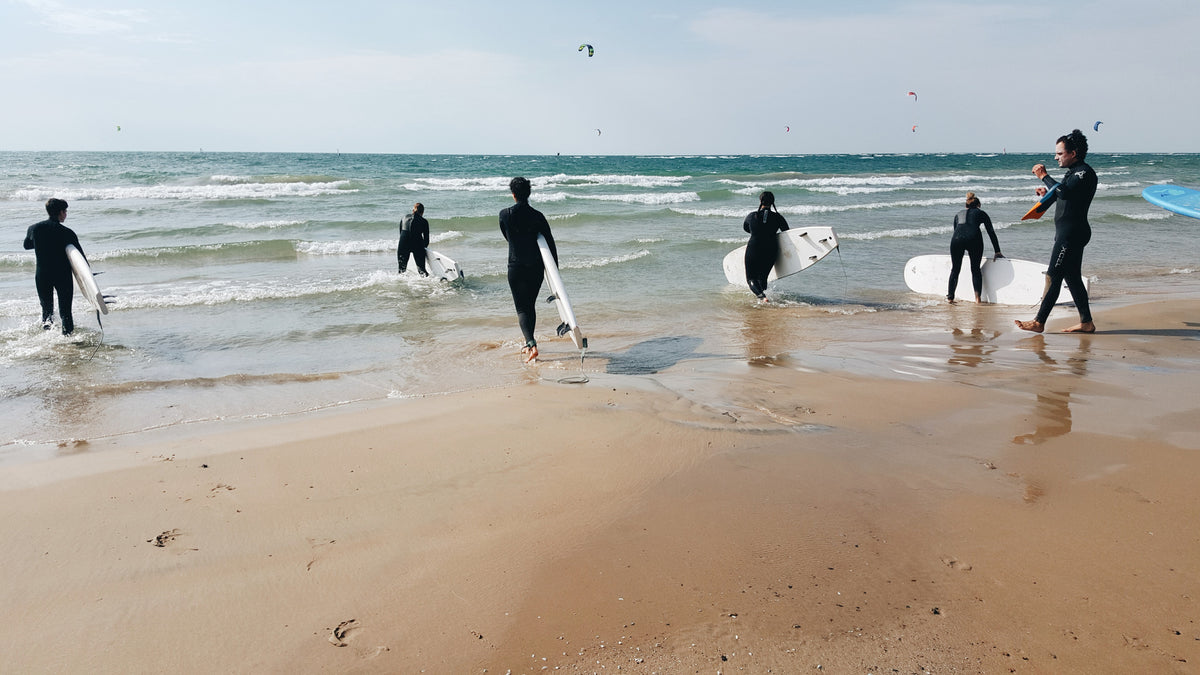
Would you rather enjoy autumn's fiery foliage from the car, or from the water while surfing Lake Erie? On one fall Sunday, Surf the Greats instructors took six first-timers out on Lake Erie. In great conditions for teaching, the group went through the core fundamentals of surfing: safety, surf stance, how to paddle and the pop-up.

The highlights were seeing everyone paddle into their own waves and come back to the lineup buzzing. Some even took a stab at unbroken waves and stayed in the water long after the lesson ended.
Lesson story by Matty Weiler. Photos by Elie Landesberg.
Beginner FAQ
Is it hard to learn to surf on the Great Lakes?
It's a bit harder than learning in warm ocean water because waves are shorter and less frequent, and fresh water floats you less. Pick small days, ride a big soft-top and be patient.
How cold is the water when learning?
In late August and September, the southern lakes are often in the 60s and low 70s °F (16–23°C). Lake Superior is much colder.
Do I need lessons?
Not required, but highly recommended. A lesson teaches you safety and etiquette from day one and gets you up faster.
More answers in the Great Lakes Surfing FAQ.
For your first session

Classic Wave T-shirt
A simple wave for your first one.

Surf the Greats Wave Hat
For the walk down to the beach.
Share:
5 Ways to Prepare for Surf Season on the Great Lakes
How to Surf Through Winter Without Freezing (Great Lakes Tips)