
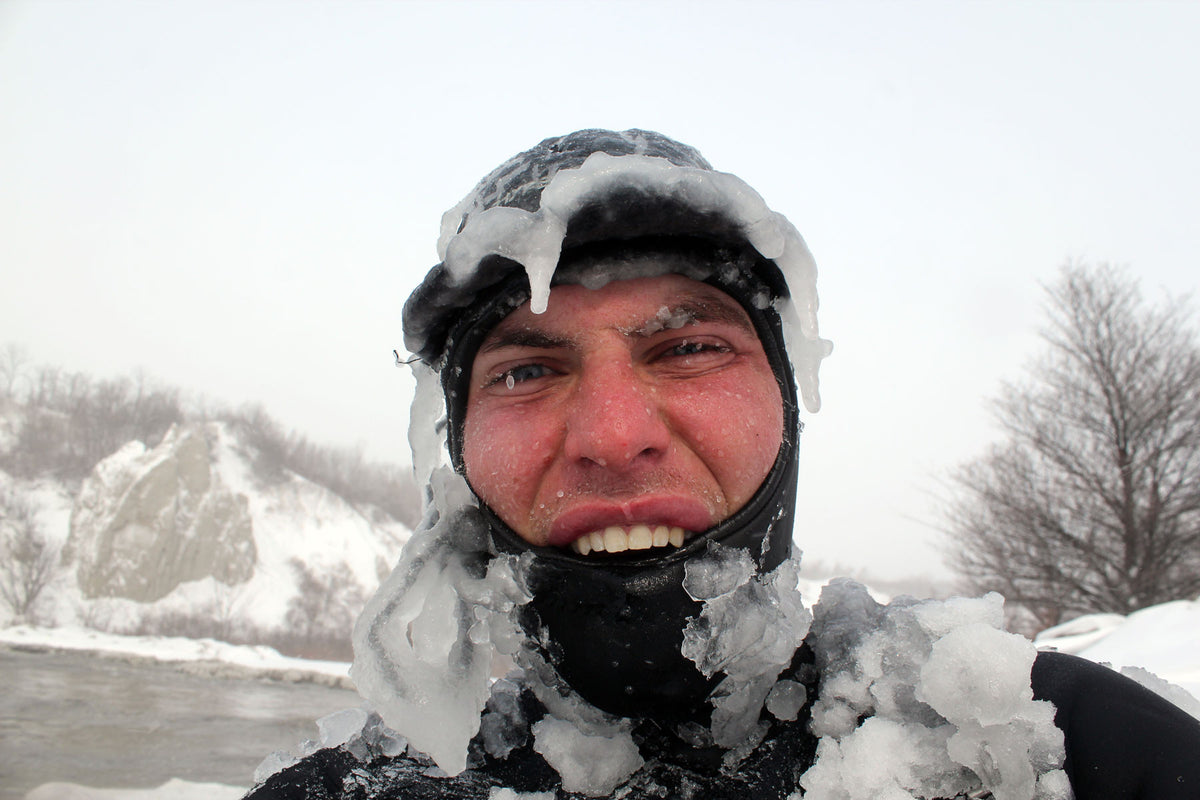
Lake surfing most months of the year is more or less a simple process: show up, paddle out, surf till you can’t anymore, then call it a day. Winter surfing, on the other hand, is less of an automated practice and can be daunting even to the most hardened veteran.
Here are a few tips from the Surf the Greats team to help you stay stoked and to keep all movement in your extremities when it’s below zero and pumping.
The quick answer: wear a hooded 5/4 or 6/5 mm wetsuit with thick boots and mitts, protect your face from the wind, keep sessions short, bring hot water for changing, and have a warm car and dry clothes waiting. Below are our crew's tips for surfing the Great Lakes from December to April.
Jump to: Winter gear · Tips from the crew · FAQ
What to wear for winter surfing on the Great Lakes
| Gear | What to get |
|---|---|
| Wetsuit | Hooded 5/4 mm minimum; 6/5 mm for the coldest days |
| Boots | 7 mm, ideally with a split toe or a strap at the ankle |
| Hands | 5–7 mm gloves or mitts (mitts are warmer) |
| Ears | Earplugs, to help prevent surfer's ear |
| After | Changing robe or towel, warm hat, hot drink |
Lake water is usually in the 30s °F (0–4°C) from about January to March. See Great Lakes water temperature by month and the cold water wetsuit guide.
Tips from the crew

Protect the money (your face)
Often a phrase used by our surf instructors when referring to protecting your head when realigning after a wipeout, this time in a new context. The winter winds can be harsh on the skin and so can the snow and the cold water too. A balm or even regular ol’ petroleum jelly smeared liberally on your face can help mitigate windburn and other wind/cold water/winter related hazards your face (your major asset) receives head on. Nay, face on. Third option: wear nothing and rock the red face with pride and watch your friends’ eyes grow wide when you tell them you were surfing in January.

Bring a thermos of hot water
Be it a sexy S’well bottle or a $3.00 thermos from the Village of Value, some stored hot water goes a long way from December to April. A few cups full of hot water poured over the wetsuit before you change out of it will liven the muscles to give you the warmth you need to get out of that pesky/soaked wetsuit in sub-zero temps. Just make sure the water is not scalding hot when you pour into your suit, or else you will create a whole new set of problems. The threat of hypothermia is real but as long as you have working heat in your car and, well, the necessary amount of dexterity needed to turn the key, you’ll be sweet.

Make room to change in your car
Having a car with enough room to change in always helps. Throw down some old towels, tarp or drop sheets and turn on the car and pump the heat at full blast while you speak in tongues shivering and squirming out of your wettie. Note of caution: those last few wrinkles of wetsuit at your ankles can be the toughest part of your day. Remember your Wim Hof breathing techniques and ensure clear head room. (few things are worse than being found naked, unconscious in the back of a car with a wetsuit around your ankles).

Jog to the spot
Challenge yourself to jog to the break. Warming up the sinews is always helpful but especially so before a good ol' fashioned Canadian winter lake surf. Get the blood flowing in the legs just be wary of gusty winds pushing you and your surf stick all over the place.

Watch your time in the water
Being new to a winter lake sesh, track the amount of time you are in the water. Surfing until your arms can't move is the way to go in warmer water temps, but from January to April can be hazardous. Listen to what your arms, legs and extremities are telling you. A few chilly duck dives are enough to onset the worst brain freeze you will ever receive. One of our instructors, maybe the one writing this, once surfed in too thin of a wetsuit in cold conditions at a popular Toronto break and couldn’t stop hyperventilating under his neoprene hoodie. Thinking he was blowing hot air around his face, he realized this was not actually the case and probably a symptom of something bad. He got out safely and was still breathing heavily for some time.
Words by Surf the Greats Instructor Matty Weiler. Photographs by Lucas Murnaghan and Jordan Fritz.
Winter surfing FAQ
Can you surf the Great Lakes in winter?
Yes. Winter brings some of the most powerful storms of the year, and lakes that don't freeze over, like Lake Ontario and Lake Michigan, get waves all season. You need serious cold-water gear and a plan for getting warm afterward.
How long can you stay in the water in winter?
It depends on your gear, the air temperature and wind, but plan on shorter sessions than in summer. Get out as soon as you stop being able to warm back up. You still have to walk back to the car and change.
What's the hardest part of winter surfing?
Usually getting changed. Bring hot water to pour into your suit, change in a warm car and lay out dry clothes before you paddle out.
More: coldwater surfing: how to stay out of trouble · how to protect yourself from surfer's ear · Great Lakes Surfing FAQ
For after the session

Skull Cap Hoodie
For the walk back to the car.

Frozen Break T-Shirt
For the ones who surf through the freeze.
Share:
5 Ways to Prepare for Surf Season on the Great Lakes
Learning to Surf on the Great Lakes: A Beginner's Guide