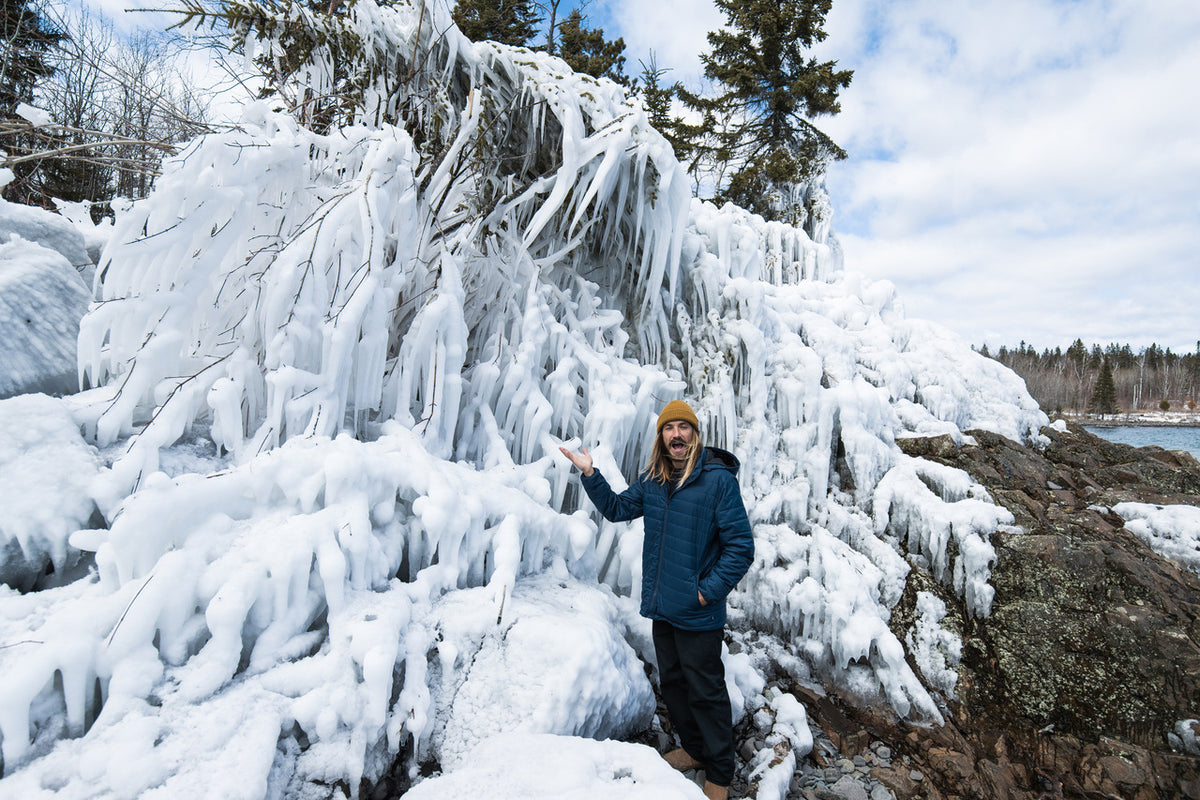
What is a lake surfer? Are they different from you and I? Join host Dylan Graves on his quest to the “FREEZING GNARLS” of Duluth, Minnesota to find answers. Dylan links up with lake surfing specialist Burton Hathaway as they connect with the rest of the surfing community in the Great Lakes to experience the biggest winter storm of the season.
Music Credits: All music written and performed by Dylan Graves and Dave Malcolm. “Weird Waves Theme” “EchoLAKE” “Ice Chunks” “Stoney Point” “Split Rock”
Why Great Lakes waves are so weird
Dylan Graves had a point: lake waves really are different from ocean waves. Here's why.
Wind swell, not groundswell
Ocean surf usually comes from storms hundreds or thousands of miles away. That swell travels a long way, sorts itself out and arrives as long-period groundswell, often 10 to 20 seconds between waves. Lake waves are made by wind blowing over the lake right now. They're short-period wind swell, usually 4 to 8 seconds apart, so they're steeper, choppier and gone soon after the wind dies. That's why lake surfers paddle out in the storm, or right as the wind shifts and cleans things up.
Fresh water floats you less
Fresh water is less dense than salt water, so you and your board sit a little lower. Most lake surfers ride more volume than they would in the ocean.
Seiches: the lake sloshes
A seiche (say "saysh") is a slow, lake-wide slosh. Strong wind or a pressure change pushes water toward one end of a lake, and when the storm passes, it surges back and forth for hours or even days. Seiches can change water levels by several feet. Lake Erie, the shallowest lake, gets the most of them, and they're most common in fall.
Meteotsunamis
Rarer and faster than seiches, meteotsunamis are tsunami-like waves set off by fast-moving thunderstorms and squall lines. They arrive as one or a few surges, minutes apart. In 1954 a meteotsunami about 10 feet high hit the Chicago shoreline and swept eight fishermen to their deaths. In September 2014, water levels near Sault Ste. Marie on Lake Superior rose and fell about 65 inches within a couple of hours.
Ice
And then there's the ice: icicle beards, frozen wetsuits, shore ice shelves and slush in the lineup. You won't find that in Hawaii.
Keep reading: how to read a Great Lakes surf forecast · the Witch of November · surfing Lake Superior · surfing Lake Erie · Great Lakes Surfing FAQ

Frozen Break T-Shirt
For the icicle-beard crowd.
Source: International Joint Commission: seiches and meteotsunamis on the Great Lakes.
Share:
Sip Spotlight: Brothers Coffee Roasters
Psycho Surfers and Psycho Benefits of Surfing