Yes, people surf in Chicago, with the skyline behind them and snow on the sand. When a strong north or northeast wind blows down Lake Michigan, the city's lakefront gets real, rideable waves. Here's where you're allowed to surf, when it's worth paddling out, and what you need.
Is surfing legal in Chicago?
Yes, at designated beaches. Chicago banned surfing in 1988, after a girl drowned near Montrose Harbor. Local surfers and the Surfrider Foundation pushed back for years, and in 2009 the Chicago Park District lifted the blanket ban on wave-riding sports like surfing, bodyboarding and stand-up paddling.
Today, Montrose Beach and 57th Street Beach are the main surf beaches, and Osterman and Rainbow have been added in the off-season (Labor Day to Memorial Day). Surfing anywhere else can still get you a ticket. Rules can change, so always check the Chicago Park District and the posted signs before you go.
When does Chicago get waves?
Chicago sits at the south end of Lake Michigan, so it needs north or northeast winds blowing down the length of the lake. The longer and harder the wind blows, the bigger the surf. A steady 20+ knot north wind for half a day can turn the lakefront on.
- Fall (September to December): the best season. Storms are frequent and the water is still bearable.
- Winter: big storms and empty lineups, with ice to deal with. Experienced surfers only.
- Spring: some waves, very cold water.
- Summer: mostly flat.
Lake waves die quickly when the wind drops, so the best time to go is usually while the wind is still blowing, or right as it starts to ease or swing offshore (west).
Chicago surf beaches
Montrose Beach
On the North Side, near Montrose Harbor. It's the city's best-known surf beach and works on north and northeast winds.
57th Street Beach
On the South Side by the Museum of Science and Industry. Another designated surf beach that picks up north wind swell.
Osterman and Rainbow (off-season)
Osterman Beach (Hollywood Avenue, Edgewater) and Rainbow Beach (South Shore) open to surfing outside the summer swim season.
Just outside the city
Evanston's Dempster Street jetty can make a left on a strong north wind, and northwest Indiana (Whiting and beyond) often gets bigger waves than the city on the same swell. See our full Lake Michigan surf guide for Sheboygan, Grand Haven and more.
What to wear surfing in Chicago
Lake Michigan off Chicago averages around 59°F in October, 50°F in November and the mid-30s in January and February. Most surf days call for a hooded 5/4 mm wetsuit, boots and gloves, and a 6/5 mm with 7 mm boots and mitts in winter. See the month-by-month table in our cold water wetsuit guide.
Staying safe on the lakefront
- Stay off the breakwalls and away from piers. Currents along them are strong, and the rocks are slick and icy.
- Never surf alone, especially in winter.
- Check water quality after heavy rain. The city posts beach advisories.
- Know your limits. Big north-wind days are powerful and messy.
More in coldwater surfing: how to stay safe and our Great Lakes Surfing FAQ.
Rep the city break

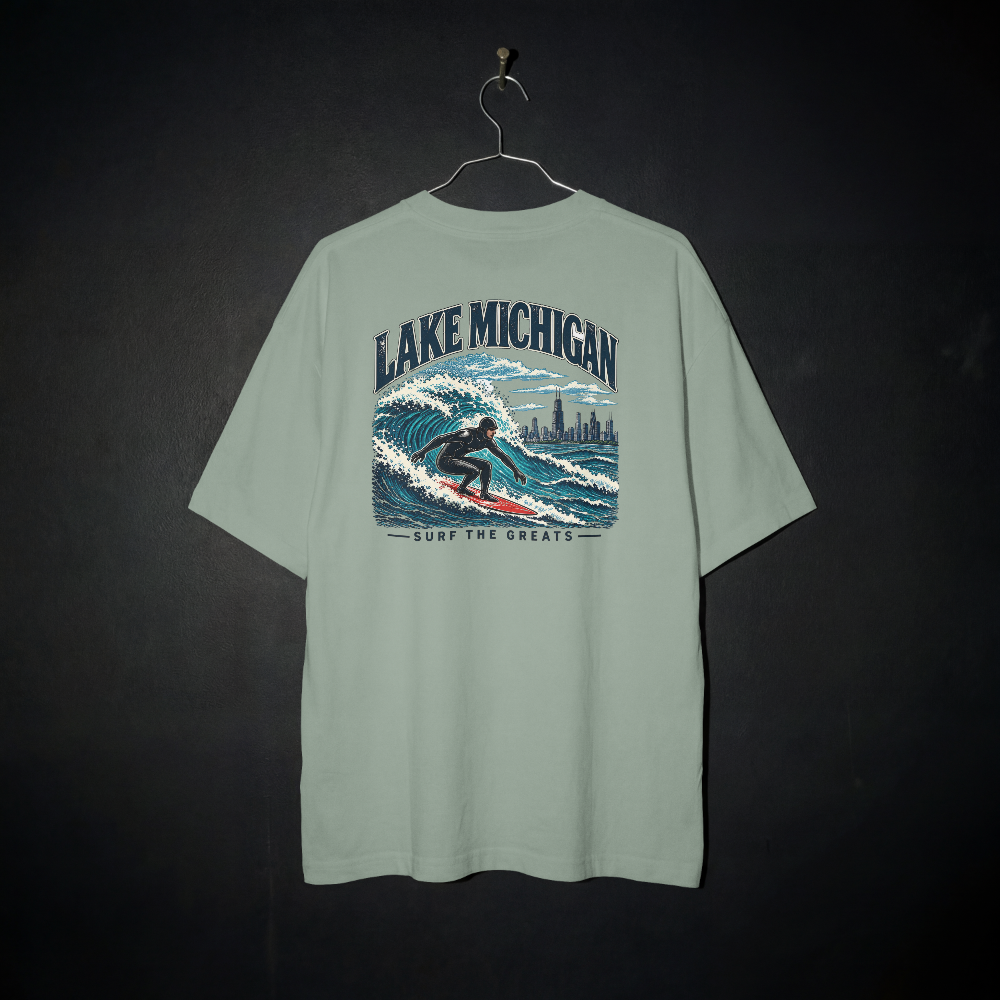
Lake Michigan Chicago Skyline T-shirt
Chicago's skyline with a Lake Michigan wave in front of it.

Lake Michigan Different Water Hoodie
For the walk back to the car on a January session.
Shop the full Lake Michigan collection.
Sources: WBEZ Curious City, Chicago Park District, water temperatures from seatemperature.info.
Share:
Great Lakes Surfer Gift Guide 2026
Surfing Lake Ontario and Toronto: Spots, Winds and Seasons